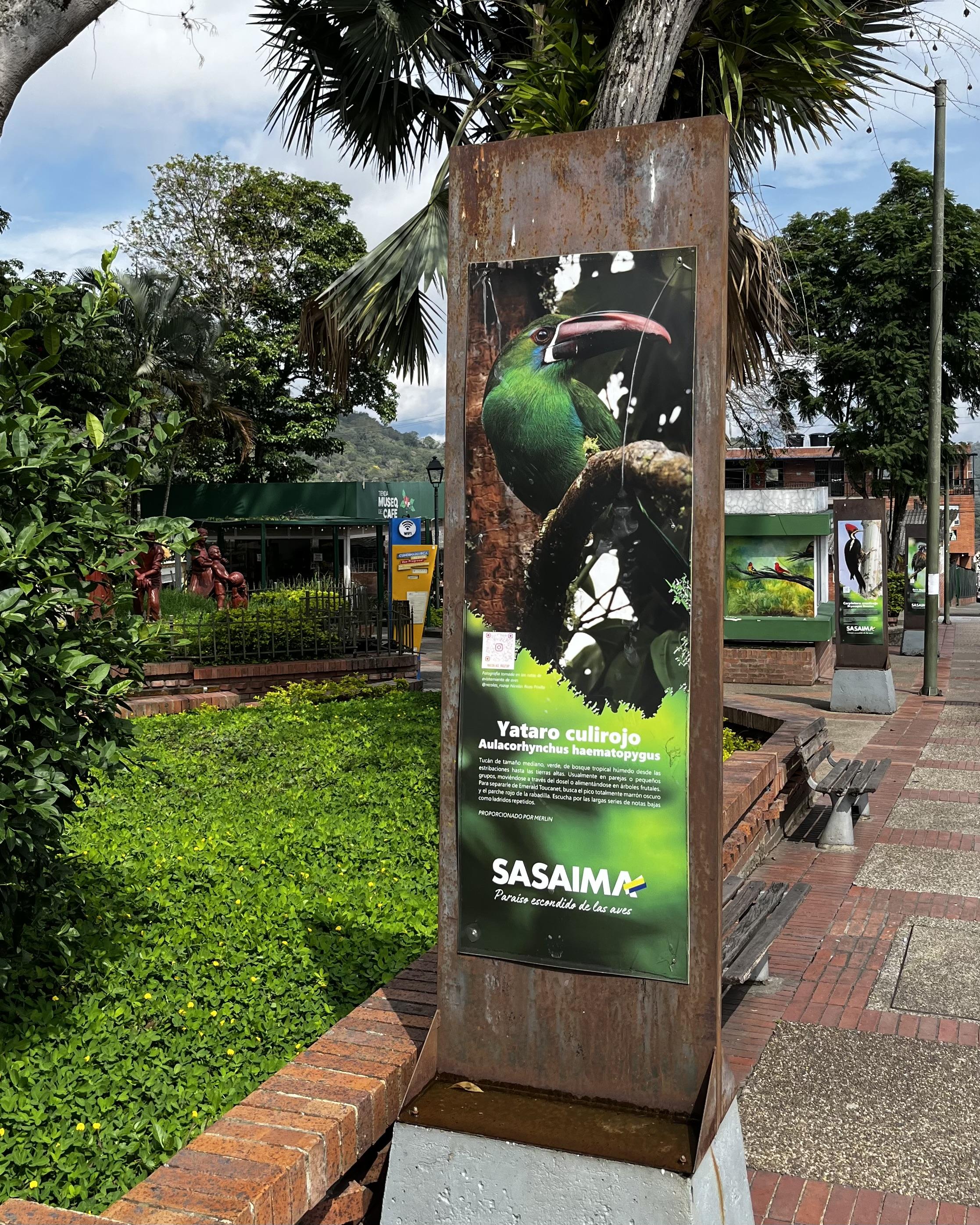
It’s an attractive destination because it is a warm escape from the chilly capital of Bogotá, and it is one of the few spots in the region that produces coffee. When I met with a local tour guide, he explained that many international tourists come to Sasaima for the excellent bird-watching and explained the frustration when a bus of Dutch visitors arrived and nobody could guide them due to the language barrier. A knowledge of English could help highlight the town’s tourist offerings and businesses, boosting the local economy.
Beyond the tiny borders of Sasaima, bilingualism is seen as a national priority due to Colombia’s relationship with the United States. In fact, English is one of the mandatory subjects that all students must be tested on to graduate high school and apply for universities. Therefore, fluency is one way that students can look for better opportunities outside of their town, where jobs are limited to farm work and food service. Particularly appealing are jobs in call centers and tech companies.
The classroom can also be a place where communities can strengthen values that create a healthier, safer society. Colombia finds itself in a complex peace process after decades of violence and insecurity. Building peace is an everyday process occurring everywhere, including the household, local, national and international levels. As small of a contribution as it seems, an English class is another community space to welcome everybody and foster values like tolerance towards our differences, especially since students learn not only about language but also about other cultures. These spaces are healthy outlets for kids, keeping them busy and out of trouble on the streets.