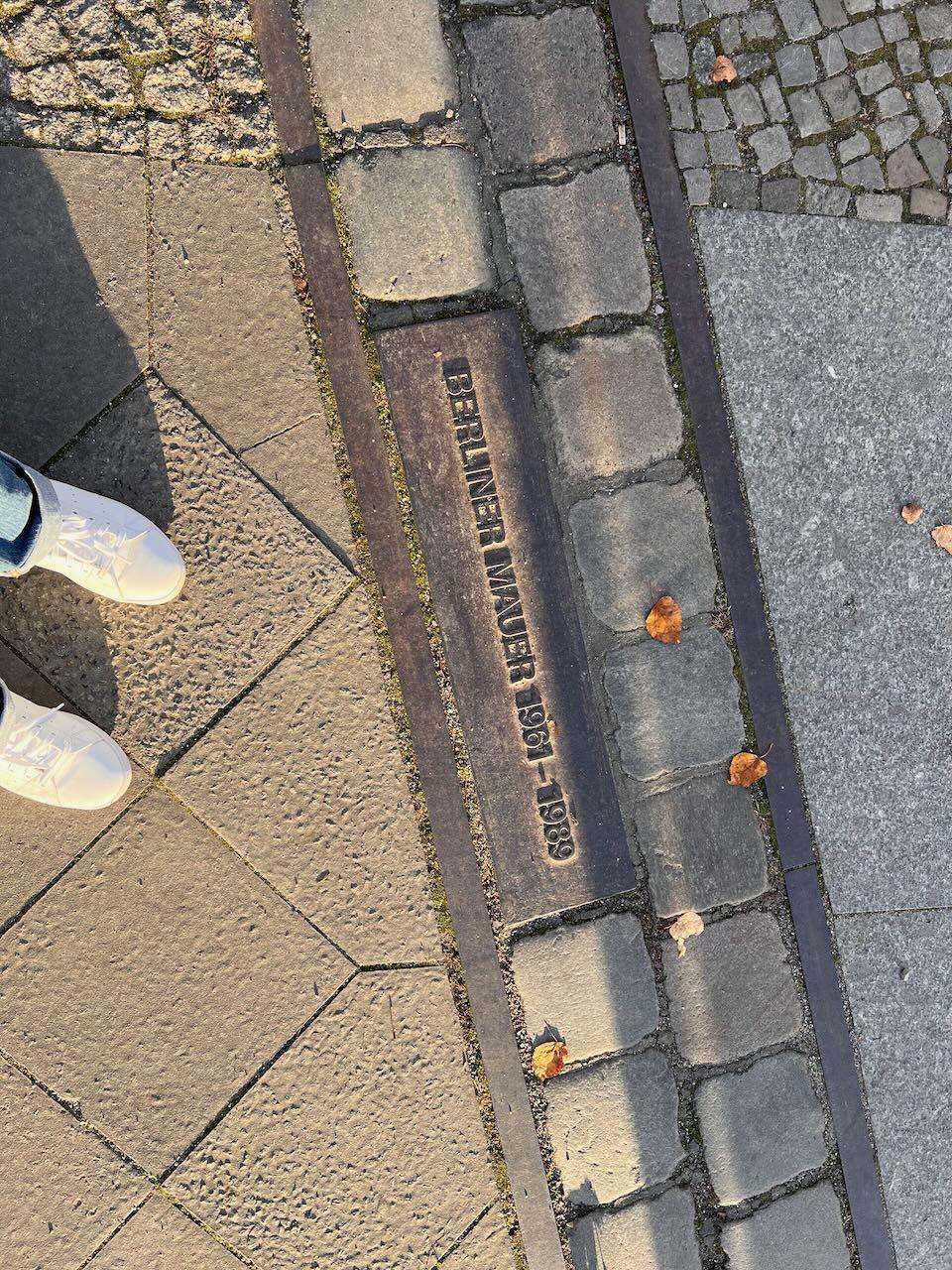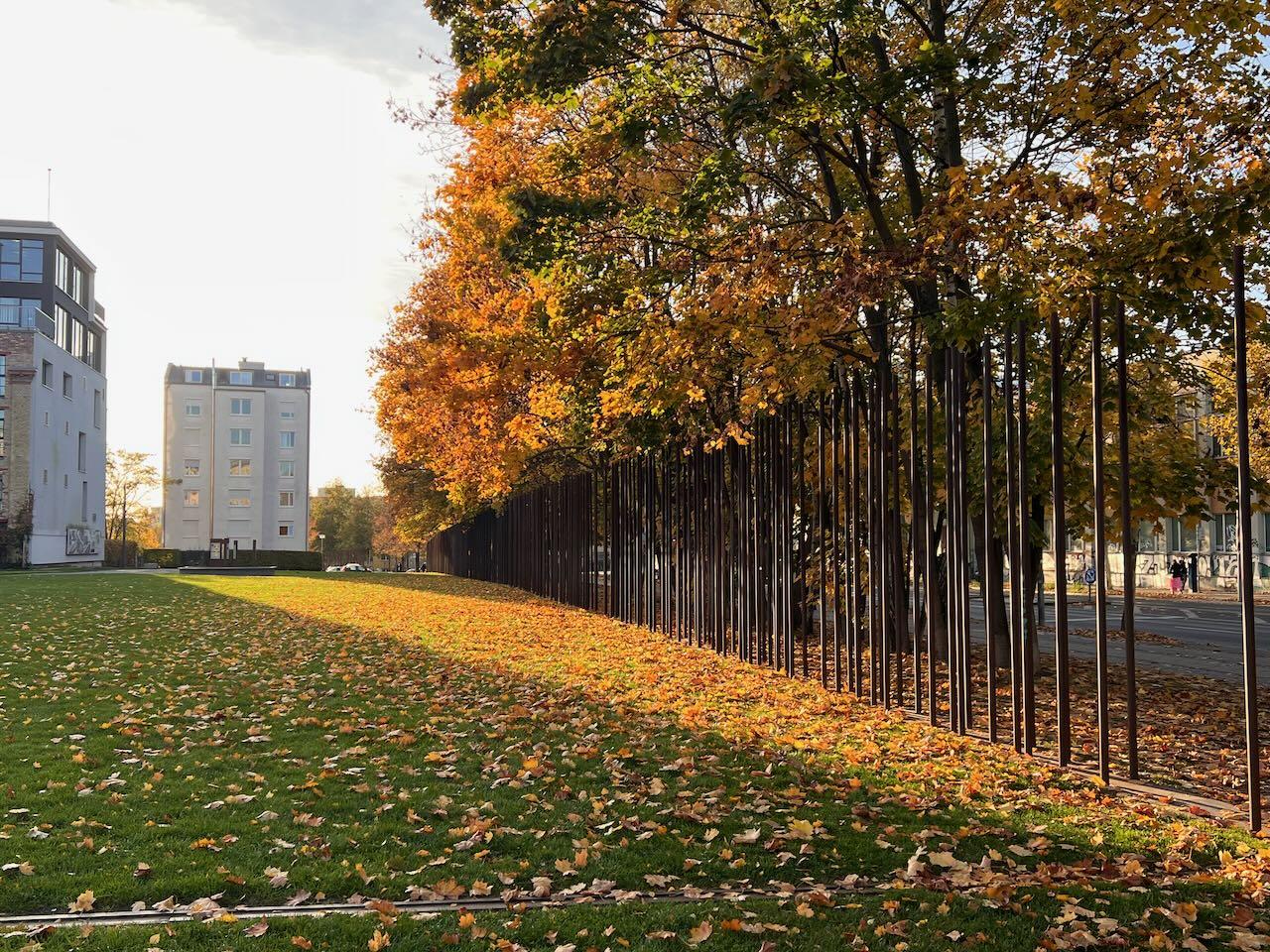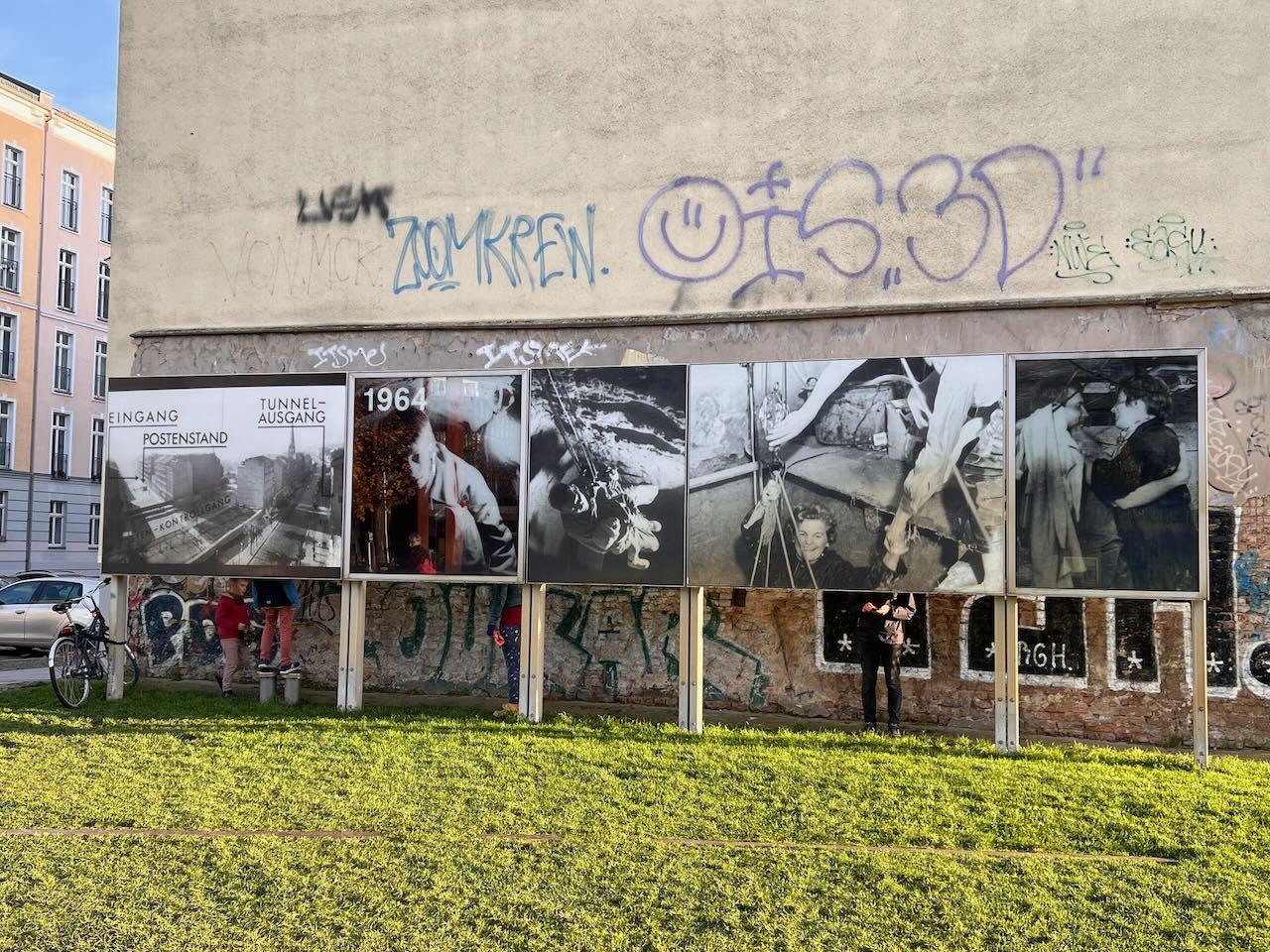
Although most of the wall was dismantled, (pieces of which were sent to places all over the world, visit enmap.the-wall-net.org to see where), parts of it remain around the city as a memorial to the many lives lost during those years of separation. My apartment is two blocks away from the main Berlin Wall memorial, which includes a large section of the wall which used to divide the street there. In places where the wall was removed, special markers were placed in the pavement in its place. A section of the wall called The East Side Gallery doubles as an open-air graffiti art gallery, and is a popular destination for visitors to see a sample of the miles of artwork which used to cover the West side of the wall.
Since arriving in Berlin, I’ve met a handful of people who were here during the city’s separation and told me a bit about what life was like with the wall and after its fall. The person I’m renting my apartment from told me about growing up in West Berlin, which enjoyed more freedom and American influence than its Eastern counterpart. He told me he only visited East Berlin once, and was surprised by how repressed and disheveled it felt. Another person I spoke with told me that when he saw the wall coming down on the news, he quickly went to a hardware store, bought a hammer, and started knocking off pieces of the wall with the hundreds of other protestors. He even pocketed a piece, which he still has today. When the wall fell, everyone wanted to reunify the city as quickly as possible. Many people left East Berlin to look for better-maintained apartments and higher-paying jobs in the West. Some people took inspiration from the East, such as the Amplemann (the little guy you see on the crosswalk light).